PSG<>ARSENAL game
Arina J
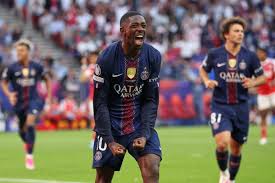
Paris Saint-Germain successfully defended their UEFA Champions League title with a nerve‑shredding penalty shootout victory over Arsenal at the Puskás Aréna in Budapest, winning 4–3 on spot‑kicks after a 1–1 draw across 120 minutes.[1][5] In a final that swung dramatically from one side to the other, Arsenal took an early lead through Kai Havertz before a second‑half penalty from Ousmane Dembélé dragged PSG back into the contest.[1][4] With neither team able to find a winner in extra time, the destiny of the trophy was settled from the spot, where Arsenal’s Gabriel Magalhães missed the decisive kick to hand PSG back‑to‑back European crowns.[1][3] Lightning Start from Arsenal Arsenal, chasing the first Champions League title in their 140‑year history, made the perfect start in Budapest.[1] Mikel Arteta’s side, buoyed by their recently secured Premier League triumph, settled quicker and stunned PSG with a goal inside the opening ten minutes. In the 6th minute, a flowing Arsenal move ended with Kai Havertz finishing clinically to put the Gunners 1–0 up.[1][4] The German forward, who has been central to Arsenal’s evolution under Arteta, stole a march on the PSG defence and converted, giving the English champions both the lead and early confidence. That early strike forced PSG to chase the game. Luis Enrique’s side, aiming to become only the second team in modern Champions League history to retain the title, initially struggled to impose their usual rhythm as Arsenal’s press disrupted their buildup.[3][4] PSG Grow Into the Game As the first half wore on, PSG gradually settled. The French champions began to control possession, with their attacking stars probing the Arsenal back line. Still, clear‑cut chances were limited, and Arsenal reached the interval with their slender advantage intact, thanks in part to disciplined defending and smart game management. After the break, PSG increased the tempo. They pushed Arsenal deeper, stretching the play and targeting the spaces between the lines. The turning point arrived midway through the second half when Georgian winger Khvicha Kvaratskhelia, a major attacking threat for PSG, burst into the box and drew a foul from Arsenal defender Cristhian Mosquera.[4] The referee pointed to the spot, and the momentum of the final shifted. Dembélé’s Equaliser from the Spot In the 65th minute, Ousmane Dembélé, PSG’s Ballon d’Or winner and talismanic forward, stepped up to take the penalty.[1][2] Facing immense pressure, Dembélé calmly converted from 12 yards, sending the goalkeeper the wrong way and levelling the match at 1–1.[1][4] The equaliser ignited the PSG supporters and shifted the psychological balance. From that moment, the holders looked the more assertive side, pushing for a winner while Arsenal, having led for almost an hour, tried to re‑establish control. Extra Time: Tension Overcomes Quality Neither team could land the decisive blow in the final 25 minutes of normal time, sending the game into extra time.[4][5] Fatigue and tension became increasingly visible. Rather than an open, end‑to‑end contest, extra time was a cagey affair, with both sides wary of making the mistake that would cost them the trophy. PSG looked marginally more dangerous, circulating the ball patiently and probing around the Arsenal area, while the Gunners threatened sporadically on the break. Defenders on both sides produced crucial interventions, and goalkeepers remained alert, but the final pass and finish were missing as the clock ticked down.[3][4] With exhaustion setting in and neither side able to manufacture a clear opening, the referee’s whistle at the end of extra time confirmed that the 2025–26 Champions League would be decided by penalties.[5] The Penalty Shootout Drama The shootout encapsulated the drama of the entire night. PSG and Arsenal exchanged successful spot‑kicks in the early rounds, with tension steadily rising in the stadium packed with more than 60,000 supporters.[5] Over the course of the shootout, PSG converted four of their five penalties, while Arsenal managed only three.[1][5] The turning point came when Arsenal’s Eberechi Eze, one of their standout performers this season, saw his effort fail to find the net.[1] That miss tilted the balance towards PSG and piled pressure onto Arsenal’s remaining takers. The decisive moment arrived with Arsenal defender Gabriel Magalhães. Needing to score to keep Arsenal alive, Gabriel stepped up but fired his penalty over the crossbar, sending the PSG players and fans into delirium and leaving the Gunners devastated.[1][3][5] History for PSG, Heartbreak for Arsenal PSG’s 4–3 shootout victory secured their second successive Champions League title, confirming their status as Europe’s dominant force over the past two seasons.[1][3][5] They became just the second club in the modern era to win back‑to‑back Champions League trophies, following in the footsteps of Real Madrid’s 2017–18 side.[3][5] For Arsenal, the defeat was particularly painful. Having ended a 22‑year wait for a Premier League title earlier in the season, Arteta’s team arrived in Budapest with genuine belief that they could complete a historic double.[3] Instead, their long quest for a first European crown continues, their hopes undone not by the quality of their football but by the unforgiving lottery of penalties. The performance, though, underlined Arsenal’s resurgence on the European stage: an early lead in a Champions League final, a disciplined display over 120 minutes, and a campaign that restored the club’s status among the continent’s elite.[3][4] A Final to Remember The 2026 final in Budapest will be remembered as a tense, tactical battle, illuminated by moments of individual brilliance and defined by slender margins. Havertz’s early strike, Dembélé’s nerveless penalty, Mosquera’s costly foul, and Gabriel’s wayward spot‑kick each became key chapters in a gripping narrative that ultimately saw PSG lift the trophy once more.[1][3][4] For PSG, it cements a golden era in the club’s history. For Arsenal, it is another night of European heartbreak—but also a platform on which to build, knowing they came within a single kick of rewriting their continental story.