Dakhla Drives Tourism Surge in Morocco's Sahara


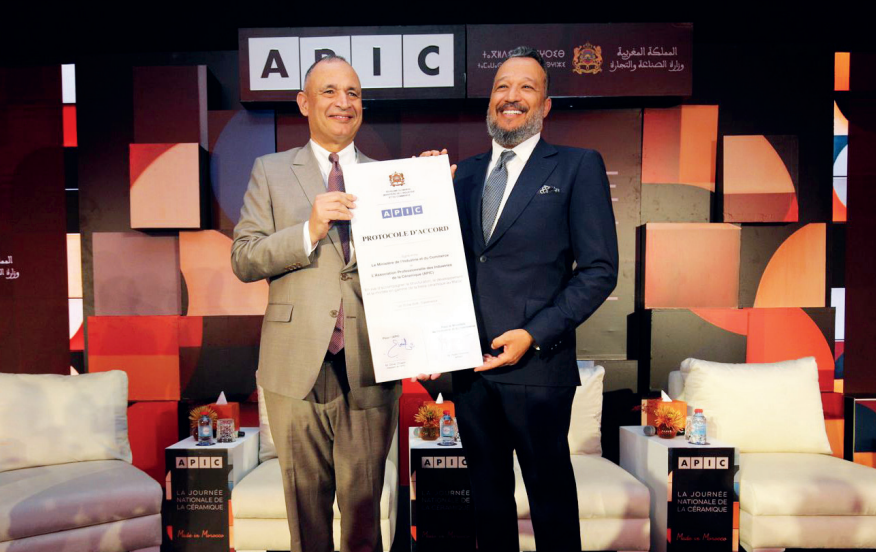
Morocco's Professional Association of Ceramic Industries (APIC) and the Ministry of Industry and Trade signed a landmark strategic framework agreement at the inaugural National Ceramics Day in Casablanca, formalizing a comprehensive 2026–2030 Ceramic Accord designed to transform one of the country's most historically embedded industrial sectors. Industry and Commerce Minister Ryad Mezzour presided over the signing ceremony alongside leading figures from the ceramics industry, architecture, design, and academia. In a symbolic gesture that drew applause from attendees, the protocol was signed directly on a ceramic tile — a nod, according to organizers, to "an industry deeply rooted in Moroccan know-how and resolutely oriented toward the future." The Accord is structured around five strategic axes: industrial competitiveness, energy efficiency, market structuring, quality upgrading, and innovation. Omar Chaabi, President of APIC, argued that Morocco's ceramic sector now possesses the industrial foundations needed to make a decisive leap forward, and that the key challenge is building a coherent joint public-private trajectory to get there. Minister Mezzour acknowledged the sector's progress, praising operators for their creativity and upgrading efforts, as well as their role in structuring the downstream ecosystem of installers and distributors. He described ceramics as "an integral part of the kingdom's civilizational heritage" that Morocco has successfully integrated into a modern industrial system. The National Ceramics Day itself brought together industrialists, architects, designers, academics, and public officials around themes including the revaluation of Moroccan ceramics, quality standards, energy efficiency, import competition, and export prospects. Moroccan ceramic exports have been growing steadily, and the new Accord is expected to accelerate the sector's international positioning significantly by 2030.

Morocco announced a comprehensive new cross-ministerial climate framework on Friday, signaling a significant escalation in the country's ambition to meet its renewable energy and emissions reduction targets. The framework was developed jointly by the Ministries of Energy Transition, Industry, Agriculture, and Interior. The announcement came as Morocco prepares to submit its updated Nationally Determined Contribution (NDC) to the UNFCCC. The country currently targets 52% of electricity generation from renewable sources by 2030, with carbon neutrality by 2050. Central to the new framework is an expansion of Morocco's solar and wind energy program, with 9.4 gigawatts of new renewable capacity either under construction or in advanced development stages. The framework also addresses climate adaptation measures, including water resource management, agricultural resilience, and coastal protection — priorities that have taken on new urgency following the severe droughts that affected Morocco between 2018 and 2025. International partners including the European Union, the World Bank, and the African Development Bank have pledged continued financial and technical support for Morocco's climate transition.

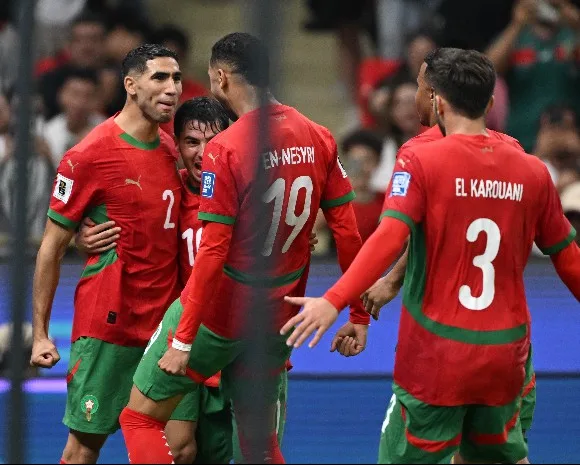
Tantan – The head of the football department at Spain’s LaLiga, Juan Florit, said that Morocco’s national football team has established itself among the elite of international football and is now considered one of the best teams in the world. Speaking to the Moroccan news agency (MAP), Florit said Morocco has achieved strong results in recent years at both continental and international levels, which has allowed it to join the ranks of global football powers. He said the strength of the Moroccan team lies in its balance, as it combines young rising talent with experienced players, creating a well-structured and competitive squad. Florit also expressed his best wishes for Morocco ahead of the upcoming FIFA World Cup. He also noted the growing presence of Moroccan players in Spain’s first and second divisions, noting that many have become key players in their clubs. He said Moroccan players are now among the most represented foreign nationalities in Spanish football academies after Spanish players, a sign of their strong development. According to him, young Moroccan players show natural talent and tactical maturity that help them succeed in the highly competitive Spanish football system. Florit also described Morocco as a strategic partner for LaLiga and said the Spanish league is committed to strengthening cooperation between Moroccan and Spanish football systems. He pointed to the “Next Gen Draft” program, organized by LaLiga and EA SPORTS, which is hosting eight young Moroccan talents this year, including four girls and four boys. The program aims to give young Moroccan players hands-on training experience in Spain and exposure to professional coaching methods used by top Spanish clubs. He said this kind of experience will help improve their skills and competitiveness. Looking ahead to the 2030 FIFA World Cup, which Morocco will jointly host with Spain and Portugal, Florit said the tournament is a major opportunity for both sides of the Strait of Gibraltar. He added that the next four years will be important for expanding cooperation between Morocco and Spain and maximizing their shared football potential.