PSG<>ARSENAL game— SportsSports Journalists' Golf Cup Concludes in Agadir— SportsOfficial: Morocco's World Cup 2026 Squad is Here— SportsLaLiga Official: Morocco Now Among World's Top Football Teams— SportsPSG<>ARSENAL game— SportsSports Journalists' Golf Cup Concludes in Agadir— SportsOfficial: Morocco's World Cup 2026 Squad is Here— SportsLaLiga Official: Morocco Now Among World's Top Football Teams— Sports
Chinese Medical Tech Group Builds First African Plant in Morocco
North Africa Post·
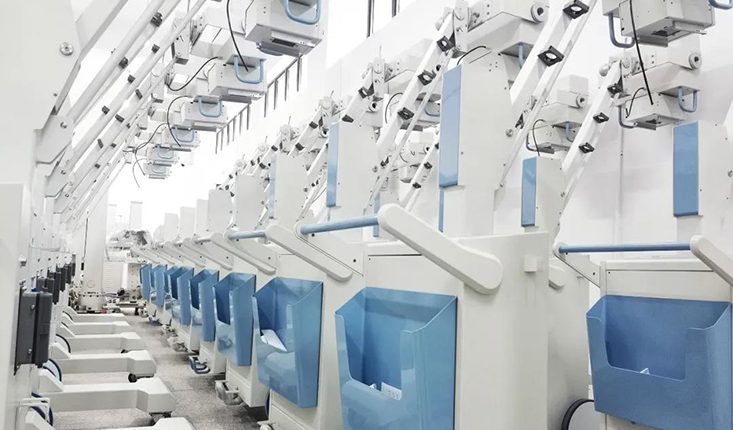
Chinese medical technology firm Jiangsu Aishelun Medical has launched construction of its first African manufacturing plant at the Mohammed VI Tangier Tech City, marking a new chapter in Morocco's emergence as a preferred destination for high-value Chinese industrial investment on the African continent. The plant will produce a range of medical devices and diagnostic equipment, with production primarily destined for African and Middle Eastern markets. Jiangsu Aishelun executives cited Morocco's strategic geographic location, well-developed industrial infrastructure, and favorable investment framework as decisive factors. Morocco's Mohammed VI Tangier Tech City has attracted growing interest from Chinese firms across automotive, electronics, logistics, and now healthcare sectors. The zone offers streamlined administrative procedures, competitive fiscal incentives, and direct port access through Tanger Med. The medical technology sector is a relatively new addition to Morocco's industrial diversification strategy, which has traditionally focused on automotive, aerospace, and textiles. The project is expected to create several hundred direct jobs upon completion and contribute to Morocco's ongoing effort to develop higher value-added manufacturing capabilities as part of its Vision 2030 industrial roadmap.
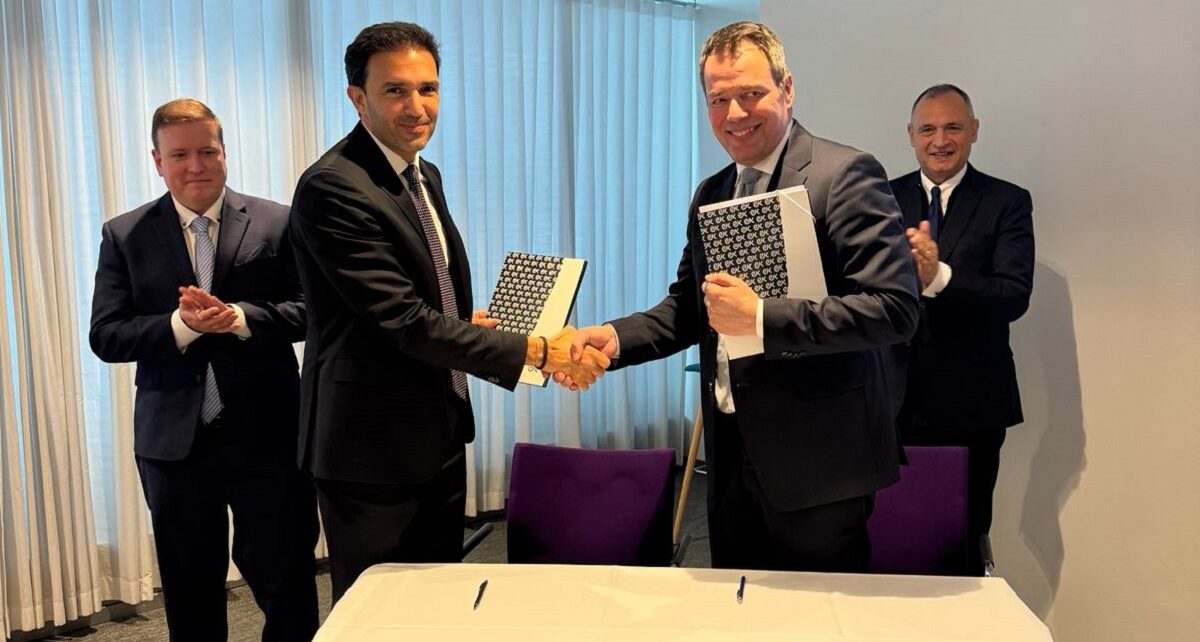
The General Confederation of Moroccan Enterprises (CGEM) and the Confederation of Finnish Industries (EK) signed a landmark partnership agreement in Helsinki, establishing the Morocco-Finland Business Council as a permanent bilateral platform for private-sector dialogue, trade facilitation, and co-investment development.
The new Business Council will serve as the primary institutional interface between the Moroccan and Finnish private sectors, providing a structured forum for companies from both countries to explore trade opportunities and develop joint ventures. Priority sectors include clean energy, digital innovation, sustainable forestry, and healthcare.
Finnish firms have shown growing interest in Morocco's energy transition market, drawn by the country's exceptional solar and wind resources and its ambitious target of reaching 52% renewable electricity by 2030.
For Morocco, the partnership with Finland represents an important step in its strategy of building a diverse portfolio of European economic relationships, complementing existing close ties with France, Spain, Germany, and Italy.
CGEM President Alj described the signing as "a concrete expression of Morocco's opening to the world" and pledged that a first joint business forum would be planned for Casablanca later in 2026.
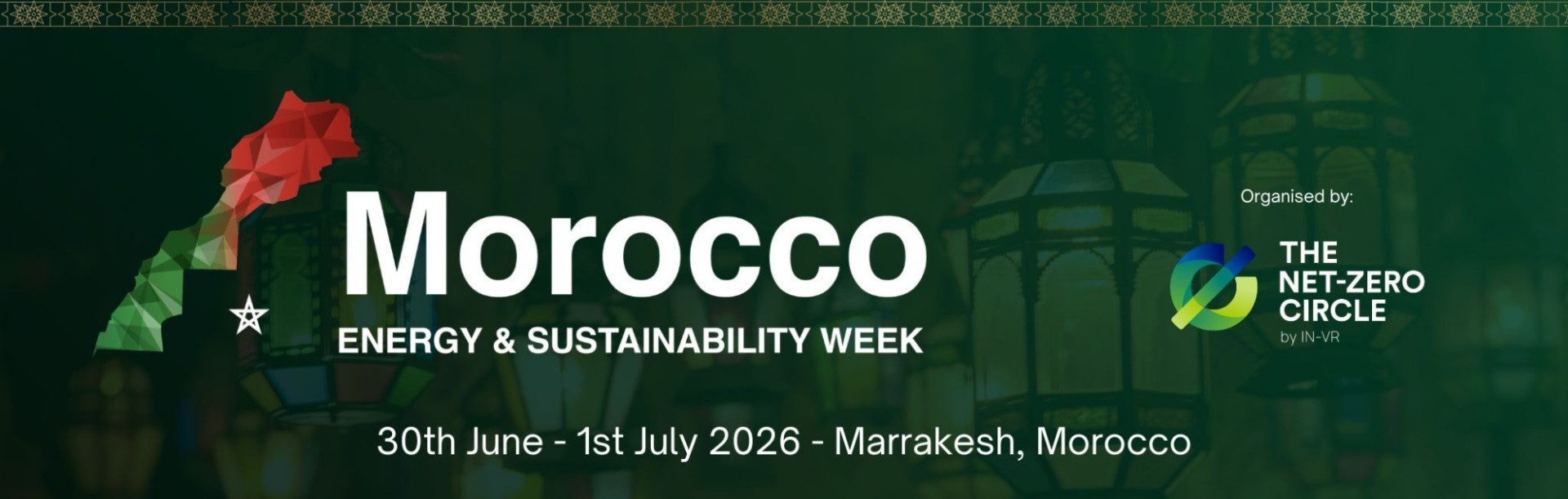
Marrakesh will host the Morocco Energy & Sustainability Week 2026 from June 30 to July 1, bringing together senior stakeholders from Morocco's rapidly evolving energy sector and international partners for two days of focused conferences, workshops, and bilateral meetings organized by IN-VR under its Net-Zero Circle platform.
The two-day programme is structured around Morocco's most strategic energy themes. Day One will focus on solar energy, project financing, green hydrogen, and wind power. Day Two will address water-energy intersections, energy transition pathways, and circular economy opportunities.
Green hydrogen has emerged as a particular focus of international investor attention, with Morocco's exceptional solar and wind resources, large available land areas, and proximity to European markets positioning the country as a potentially world-class green hydrogen producer.
The event will also provide a platform for B2B and B2G meetings, enabling project developers, investors, technology providers, and government officials to establish the partnerships needed to turn Morocco's clean energy ambitions into bankable projects.
Morocco's energy transition is recognized internationally as one of the most ambitious and credible in the developing world, with a robust regulatory and institutional framework for private investment in renewables.
Overlooking the Atlantic Ocean and straddling the Bou Regreg River, the Moroccan capital of Rabat combines centuries of history with a relaxed coastal atmosphere and well‑planned modern districts.[4][6] Recognized as a UNESCO World Heritage city for its blend of Islamic and French‑colonial heritage, Rabat offers visitors monumental architecture, archaeological treasures, lush gardens and lively traditional quarters.[3][4]
Kasbah of the Udayas: The Blue and White Citadel
One of Rabat’s most iconic sights is the Kasbah of the Udayas (also written Oudaias), a 12th‑century fortified citadel perched high above the mouth of the Bou Regreg River.[3][4][5] Within its imposing medieval walls lies a picturesque neighborhood of narrow cobbled lanes, cobalt‑blue and whitewashed houses, and flower‑filled doorways, often described as a “little blue city” within the capital.[2][3][5]
Visitors enter through the monumental Bab Oudaya gate and wander through streets that open onto sweeping views of the Atlantic Ocean and the neighboring city of Salé.[3][4][7] The kasbah marks the historic heart of Rabat and is considered by many travel writers as a must‑see attraction for first‑time visitors.[3][4]
Andalusian Gardens: A Green Refuge Inside the Kasbah
Just inside the Kasbah of the Udayas lies the serene Andalusian Gardens, a walled garden created during the French protectorate and planted with classic Andalusian species such as orange and lemon trees, roses and hibiscus.[2][7] These shaded paths and geometric flowerbeds offer a cool retreat from the city, with the sound of fountains and birdsong replacing the bustle of the medina.[2][7]
The gardens sit near the Oudaias Craft Museum and are also home to the National Jewellery Museum, adding a cultural dimension to the visit.[4] Many travelers highlight this enclave as one of the most unexpectedly charming corners of Rabat, ideal for a quiet stroll or a pause between sightseeing stops.[2]
Hassan Tower and the Esplanade of Columns
On a vast esplanade in northeastern Rabat rises the Hassan Tower, the unfinished minaret of what was intended to be the largest mosque in the world in the 12th century.[2][3][5][7] Commissioned by Sultan Yacoub el‑Mansour around 1195, the project halted after his death, leaving a 44‑meter‑high tower surrounded by the stumps of more than 200 stone columns that mark the outline of the uncompleted mosque.[2][5][7]
Despite its unfinished state, the site has become one of Rabat’s defining symbols and a key stop on any city tour.[5][9][10] In 2012, the complex was included within Rabat’s UNESCO World Heritage designation, recognizing both its historical importance and its role in the city’s monumental skyline.[2][5]
Mausoleum of Mohammed V: Masterpiece of Modern Islamic Architecture
Opposite Hassan Tower stands the gleaming Mausoleum of Mohammed V, built after the death of King Mohammed V, the monarch associated with Morocco’s independence in 1961.[2][3][4][7] This richly decorated structure, clad in white stone and topped with a green tiled roof, houses the tombs of Mohammed V and his sons, including King Hassan II.[2][4][7]
Visitors can view the royal tombs from a balcony above the burial chamber, admiring intricate zellij tilework, carved plaster and gilded ceilings that showcase Moroccan craftsmanship.[2][4] The mausoleum is notable as one of the few religious sites in the country that non‑Muslim tourists are permitted to enter, making it an essential stop for those interested in Islamic art and architecture.[2][4]
Chellah: Roman Ruins and a Medieval Necropolis
Just outside the city center, the fortified site of Chellah offers a striking encounter with Rabat’s ancient past.[2][4][6] Overlooking the Bou Regreg valley, this area was first occupied by Phoenicians in the 3rd century BCE and later developed as a Roman town, traces of which remain in roads, inscriptions and mosaic fragments.[2][4]
In the 14th century, the Marinid dynasty transformed Chellah into a necropolis, constructing a mosque, minaret, tombs and gardens within the old walls.[4][6] Today, visitors walk among tumbled Roman columns, ruined Islamic buildings and overgrown orchards where storks nest on the minaret and walls, creating an evocative blend of archaeology and nature.[2][4][6] The site is widely recommended as one of Rabat’s most atmospheric attractions.
The Medina and Souks: Everyday Life in the Old City
At the heart of Rabat lies its historic medina, smaller and more relaxed than those of Marrakech or Fes but similarly recognized as part of the city’s UNESCO World Heritage listing.[2][3][4] Within its walls, narrow streets are lined with shops selling textiles, leather goods, spices, ceramics and everyday items for locals.[2]
Travelers often appreciate Rabat’s medina for its manageable scale and less intense atmosphere, making it an accessible place to experience Moroccan street life, bargain for souvenirs or sit at a café and watch the city go by.[2] Nearby, the old market and surrounding streets link the medina with newer boulevards, illustrating Rabat’s blend of tradition and modernity.[1][4]
Royal Palace and Modern Cultural Sites
Rabat is also the seat of the Moroccan monarchy, and the Royal Palace of Rabat (Dar al‑Makhzen) remains the official residence of the royal family.[2][4][7] Located between the Quartier des Orangers and the Agdal‑Ryad districts, the palace complex is not open for interior visits, but its gates, ceremonial guards and surrounding administrative buildings form part of many city tours.[4][7]
Beyond its historical monuments, the capital features several significant cultural institutions, including the Museum Mohammed VI of Modern and Contemporary Art, as well as other museums and galleries that reflect Rabat’s role as a cultural hub.[6][9] Festivals such as the Mawazine World Music Festival further reinforce the city’s reputation as a vibrant, living capital.[5][6]
Beaches, Gardens and Coastal Leisure
Rabat’s location on the Atlantic coast gives it a long stretch of well‑equipped beaches, popular with residents and visitors for swimming, sunbathing and particularly surfing.[6][7] Rabat Beach, on the northwest side of the city, is regularly cited among the main recreational areas for water sports.[7]
Within and around the city, numerous green spaces add to the quality of life, including the botanical test garden and the Exotic Gardens of Bouknadel a short distance away.[6] These parks, together with the coastal promenade and marina along the Bou Regreg, complete the picture of Rabat as both a historic capital and a pleasant city to live in and explore.[4][6][9]