PSG<>ARSENAL game— SportsSports Journalists' Golf Cup Concludes in Agadir— SportsOfficial: Morocco's World Cup 2026 Squad is Here— SportsLaLiga Official: Morocco Now Among World's Top Football Teams— SportsPSG<>ARSENAL game— SportsSports Journalists' Golf Cup Concludes in Agadir— SportsOfficial: Morocco's World Cup 2026 Squad is Here— SportsLaLiga Official: Morocco Now Among World's Top Football Teams— Sports
Managem Raises Stake in Tendrara Gas Concession to 75%
North Africa Post·
Moroccan mining and energy group Managem has increased its stake in the Tendrara gas concession in eastern Morocco to 75%, in a move described as a core part of its strategic pivot toward low-carbon energy diversification. The Tendrara gas field, located in the Figuig region near the Algerian border, has been a focus of exploration and development activity for several years. Independent energy assessments have identified significant gas reserves at the site, with potential for domestic supply and export. Company executives emphasized that the move is aligned with Morocco's broader National Energy Transition strategy, which targets over 52% of electricity generation from renewable sources by 2030. Natural gas is seen as a critical bridge fuel in this transition. The investment also reflects growing interest from international energy companies in Morocco's upstream gas sector, particularly as European nations seek to diversify away from Russian energy sources. Analysts noted that the Tendrara development, once operational at scale, could make a meaningful contribution to Morocco's energy security and help reduce the country's historically high dependence on imported fossil fuels.
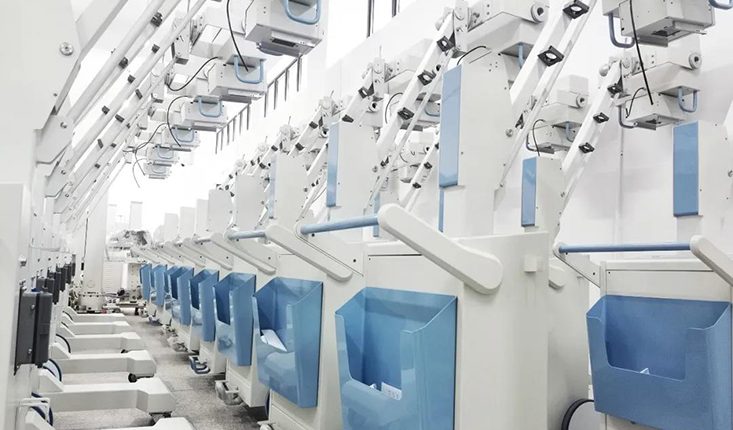
Chinese medical technology firm Jiangsu Aishelun Medical has launched construction of its first African manufacturing plant at the Mohammed VI Tangier Tech City, marking a new chapter in Morocco's emergence as a preferred destination for high-value Chinese industrial investment on the African continent.
The plant will produce a range of medical devices and diagnostic equipment, with production primarily destined for African and Middle Eastern markets. Jiangsu Aishelun executives cited Morocco's strategic geographic location, well-developed industrial infrastructure, and favorable investment framework as decisive factors.
Morocco's Mohammed VI Tangier Tech City has attracted growing interest from Chinese firms across automotive, electronics, logistics, and now healthcare sectors. The zone offers streamlined administrative procedures, competitive fiscal incentives, and direct port access through Tanger Med.
The medical technology sector is a relatively new addition to Morocco's industrial diversification strategy, which has traditionally focused on automotive, aerospace, and textiles.
The project is expected to create several hundred direct jobs upon completion and contribute to Morocco's ongoing effort to develop higher value-added manufacturing capabilities as part of its Vision 2030 industrial roadmap.
Paris Saint-Germain successfully defended their UEFA Champions League title with a nerve‑shredding penalty shootout victory over Arsenal at the Puskás Aréna in Budapest, winning 4–3 on spot‑kicks after a 1–1 draw across 120 minutes.[1][5]
In a final that swung dramatically from one side to the other, Arsenal took an early lead through Kai Havertz before a second‑half penalty from Ousmane Dembélé dragged PSG back into the contest.[1][4] With neither team able to find a winner in extra time, the destiny of the trophy was settled from the spot, where Arsenal’s Gabriel Magalhães missed the decisive kick to hand PSG back‑to‑back European crowns.[1][3]
Lightning Start from Arsenal
Arsenal, chasing the first Champions League title in their 140‑year history, made the perfect start in Budapest.[1] Mikel Arteta’s side, buoyed by their recently secured Premier League triumph, settled quicker and stunned PSG with a goal inside the opening ten minutes.
In the 6th minute, a flowing Arsenal move ended with Kai Havertz finishing clinically to put the Gunners 1–0 up.[1][4] The German forward, who has been central to Arsenal’s evolution under Arteta, stole a march on the PSG defence and converted, giving the English champions both the lead and early confidence.
That early strike forced PSG to chase the game. Luis Enrique’s side, aiming to become only the second team in modern Champions League history to retain the title, initially struggled to impose their usual rhythm as Arsenal’s press disrupted their buildup.[3][4]
PSG Grow Into the Game
As the first half wore on, PSG gradually settled. The French champions began to control possession, with their attacking stars probing the Arsenal back line. Still, clear‑cut chances were limited, and Arsenal reached the interval with their slender advantage intact, thanks in part to disciplined defending and smart game management.
After the break, PSG increased the tempo. They pushed Arsenal deeper, stretching the play and targeting the spaces between the lines. The turning point arrived midway through the second half when Georgian winger Khvicha Kvaratskhelia, a major attacking threat for PSG, burst into the box and drew a foul from Arsenal defender Cristhian Mosquera.[4] The referee pointed to the spot, and the momentum of the final shifted.
Dembélé’s Equaliser from the Spot
In the 65th minute, Ousmane Dembélé, PSG’s Ballon d’Or winner and talismanic forward, stepped up to take the penalty.[1][2] Facing immense pressure, Dembélé calmly converted from 12 yards, sending the goalkeeper the wrong way and levelling the match at 1–1.[1][4]
The equaliser ignited the PSG supporters and shifted the psychological balance. From that moment, the holders looked the more assertive side, pushing for a winner while Arsenal, having led for almost an hour, tried to re‑establish control.
Extra Time: Tension Overcomes Quality
Neither team could land the decisive blow in the final 25 minutes of normal time, sending the game into extra time.[4][5] Fatigue and tension became increasingly visible. Rather than an open, end‑to‑end contest, extra time was a cagey affair, with both sides wary of making the mistake that would cost them the trophy.
PSG looked marginally more dangerous, circulating the ball patiently and probing around the Arsenal area, while the Gunners threatened sporadically on the break. Defenders on both sides produced crucial interventions, and goalkeepers remained alert, but the final pass and finish were missing as the clock ticked down.[3][4]
With exhaustion setting in and neither side able to manufacture a clear opening, the referee’s whistle at the end of extra time confirmed that the 2025–26 Champions League would be decided by penalties.[5]
The Penalty Shootout Drama
The shootout encapsulated the drama of the entire night. PSG and Arsenal exchanged successful spot‑kicks in the early rounds, with tension steadily rising in the stadium packed with more than 60,000 supporters.[5]
Over the course of the shootout, PSG converted four of their five penalties, while Arsenal managed only three.[1][5] The turning point came when Arsenal’s Eberechi Eze, one of their standout performers this season, saw his effort fail to find the net.[1] That miss tilted the balance towards PSG and piled pressure onto Arsenal’s remaining takers.
The decisive moment arrived with Arsenal defender Gabriel Magalhães. Needing to score to keep Arsenal alive, Gabriel stepped up but fired his penalty over the crossbar, sending the PSG players and fans into delirium and leaving the Gunners devastated.[1][3][5]
History for PSG, Heartbreak for Arsenal
PSG’s 4–3 shootout victory secured their second successive Champions League title, confirming their status as Europe’s dominant force over the past two seasons.[1][3][5] They became just the second club in the modern era to win back‑to‑back Champions League trophies, following in the footsteps of Real Madrid’s 2017–18 side.[3][5]
For Arsenal, the defeat was particularly painful. Having ended a 22‑year wait for a Premier League title earlier in the season, Arteta’s team arrived in Budapest with genuine belief that they could complete a historic double.[3] Instead, their long quest for a first European crown continues, their hopes undone not by the quality of their football but by the unforgiving lottery of penalties.
The performance, though, underlined Arsenal’s resurgence on the European stage: an early lead in a Champions League final, a disciplined display over 120 minutes, and a campaign that restored the club’s status among the continent’s elite.[3][4]
A Final to Remember
The 2026 final in Budapest will be remembered as a tense, tactical battle, illuminated by moments of individual brilliance and defined by slender margins. Havertz’s early strike, Dembélé’s nerveless penalty, Mosquera’s costly foul, and Gabriel’s wayward spot‑kick each became key chapters in a gripping narrative that ultimately saw PSG lift the trophy once more.[1][3][4]
For PSG, it cements a golden era in the club’s history. For Arsenal, it is another night of European heartbreak—but also a platform on which to build, knowing they came within a single kick of rewriting their continental story.
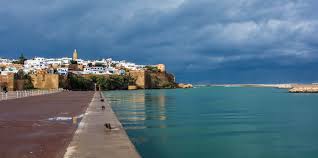
Overlooking the Atlantic Ocean and straddling the Bou Regreg River, the Moroccan capital of Rabat combines centuries of history with a relaxed coastal atmosphere and well‑planned modern districts.[4][6] Recognized as a UNESCO World Heritage city for its blend of Islamic and French‑colonial heritage, Rabat offers visitors monumental architecture, archaeological treasures, lush gardens and lively traditional quarters.[3][4]
Kasbah of the Udayas: The Blue and White Citadel
One of Rabat’s most iconic sights is the Kasbah of the Udayas (also written Oudaias), a 12th‑century fortified citadel perched high above the mouth of the Bou Regreg River.[3][4][5] Within its imposing medieval walls lies a picturesque neighborhood of narrow cobbled lanes, cobalt‑blue and whitewashed houses, and flower‑filled doorways, often described as a “little blue city” within the capital.[2][3][5]
Visitors enter through the monumental Bab Oudaya gate and wander through streets that open onto sweeping views of the Atlantic Ocean and the neighboring city of Salé.[3][4][7] The kasbah marks the historic heart of Rabat and is considered by many travel writers as a must‑see attraction for first‑time visitors.[3][4]
Andalusian Gardens: A Green Refuge Inside the Kasbah
Just inside the Kasbah of the Udayas lies the serene Andalusian Gardens, a walled garden created during the French protectorate and planted with classic Andalusian species such as orange and lemon trees, roses and hibiscus.[2][7] These shaded paths and geometric flowerbeds offer a cool retreat from the city, with the sound of fountains and birdsong replacing the bustle of the medina.[2][7]
The gardens sit near the Oudaias Craft Museum and are also home to the National Jewellery Museum, adding a cultural dimension to the visit.[4] Many travelers highlight this enclave as one of the most unexpectedly charming corners of Rabat, ideal for a quiet stroll or a pause between sightseeing stops.[2]
Hassan Tower and the Esplanade of Columns
On a vast esplanade in northeastern Rabat rises the Hassan Tower, the unfinished minaret of what was intended to be the largest mosque in the world in the 12th century.[2][3][5][7] Commissioned by Sultan Yacoub el‑Mansour around 1195, the project halted after his death, leaving a 44‑meter‑high tower surrounded by the stumps of more than 200 stone columns that mark the outline of the uncompleted mosque.[2][5][7]
Despite its unfinished state, the site has become one of Rabat’s defining symbols and a key stop on any city tour.[5][9][10] In 2012, the complex was included within Rabat’s UNESCO World Heritage designation, recognizing both its historical importance and its role in the city’s monumental skyline.[2][5]
Mausoleum of Mohammed V: Masterpiece of Modern Islamic Architecture
Opposite Hassan Tower stands the gleaming Mausoleum of Mohammed V, built after the death of King Mohammed V, the monarch associated with Morocco’s independence in 1961.[2][3][4][7] This richly decorated structure, clad in white stone and topped with a green tiled roof, houses the tombs of Mohammed V and his sons, including King Hassan II.[2][4][7]
Visitors can view the royal tombs from a balcony above the burial chamber, admiring intricate zellij tilework, carved plaster and gilded ceilings that showcase Moroccan craftsmanship.[2][4] The mausoleum is notable as one of the few religious sites in the country that non‑Muslim tourists are permitted to enter, making it an essential stop for those interested in Islamic art and architecture.[2][4]
Chellah: Roman Ruins and a Medieval Necropolis
Just outside the city center, the fortified site of Chellah offers a striking encounter with Rabat’s ancient past.[2][4][6] Overlooking the Bou Regreg valley, this area was first occupied by Phoenicians in the 3rd century BCE and later developed as a Roman town, traces of which remain in roads, inscriptions and mosaic fragments.[2][4]
In the 14th century, the Marinid dynasty transformed Chellah into a necropolis, constructing a mosque, minaret, tombs and gardens within the old walls.[4][6] Today, visitors walk among tumbled Roman columns, ruined Islamic buildings and overgrown orchards where storks nest on the minaret and walls, creating an evocative blend of archaeology and nature.[2][4][6] The site is widely recommended as one of Rabat’s most atmospheric attractions.
The Medina and Souks: Everyday Life in the Old City
At the heart of Rabat lies its historic medina, smaller and more relaxed than those of Marrakech or Fes but similarly recognized as part of the city’s UNESCO World Heritage listing.[2][3][4] Within its walls, narrow streets are lined with shops selling textiles, leather goods, spices, ceramics and everyday items for locals.[2]
Travelers often appreciate Rabat’s medina for its manageable scale and less intense atmosphere, making it an accessible place to experience Moroccan street life, bargain for souvenirs or sit at a café and watch the city go by.[2] Nearby, the old market and surrounding streets link the medina with newer boulevards, illustrating Rabat’s blend of tradition and modernity.[1][4]
Royal Palace and Modern Cultural Sites
Rabat is also the seat of the Moroccan monarchy, and the Royal Palace of Rabat (Dar al‑Makhzen) remains the official residence of the royal family.[2][4][7] Located between the Quartier des Orangers and the Agdal‑Ryad districts, the palace complex is not open for interior visits, but its gates, ceremonial guards and surrounding administrative buildings form part of many city tours.[4][7]
Beyond its historical monuments, the capital features several significant cultural institutions, including the Museum Mohammed VI of Modern and Contemporary Art, as well as other museums and galleries that reflect Rabat’s role as a cultural hub.[6][9] Festivals such as the Mawazine World Music Festival further reinforce the city’s reputation as a vibrant, living capital.[5][6]
Beaches, Gardens and Coastal Leisure
Rabat’s location on the Atlantic coast gives it a long stretch of well‑equipped beaches, popular with residents and visitors for swimming, sunbathing and particularly surfing.[6][7] Rabat Beach, on the northwest side of the city, is regularly cited among the main recreational areas for water sports.[7]
Within and around the city, numerous green spaces add to the quality of life, including the botanical test garden and the Exotic Gardens of Bouknadel a short distance away.[6] These parks, together with the coastal promenade and marina along the Bou Regreg, complete the picture of Rabat as both a historic capital and a pleasant city to live in and explore.[4][6][9]